
SEO, or Search Engine Optimization, is an essential practice for any website after its launch. By implementing a series of optimizations that comply with Google’s search guidelines, a website can gradually see an increase in organic search traffic over time. However, while the concept sounds simple, the actual execution is quite challenging due to the meticulous work required. Google provides detailed documentation on search rules, but these documents can be obscure and difficult to understand for those without internet or coding knowledge. Additionally, the scope of these documents is vast, requiring significant time to read and organize, which can be daunting for many. This is why we started writing about SEO – we aim to use easy-to-understand language and practical steps to help every website operator learn SEO, from SEO basics to advanced knowledge on their own.
This article will provide a detailed and accessible introduction to the concept of SEO basics for beginners, suitable for anyone new to the topic, whether you’re an entrepreneur or a marketing professional in a company.
Data Insights
2023-2024 Worldwide Search Engine Market Share

According to Statcounter, Google dominates the global search engine market with a 91.04% share. Following are Bing with 3.86%, Yandex with 1.36%, Yahoo! with 1.24%, Baidu with 0.91%, and DuckDuckGo with 0.62%. This means that out of every 10 people using search engines worldwide, at least 9 are using Google. Therefore, if we want to do search engine optimization, Google is essential, perhaps even the only search engine we need to focus on. Although some might argue that users in Russia and China primarily use Yandex and Baidu due to internet restrictions, the fact is many of them use VPNs to bypass firewalls and access Google.
Most Online Experiences Involve Searching
Let’s look at some more data:
- 68% of online experiences begin with a search engine. (Data from BrightEdge)
- 53% of website traffic comes from organic search. (Data from BrightEdge)
- 93% of global traffic comes from Google searches, Google Images, and Google Maps. (Data from SparkToro)
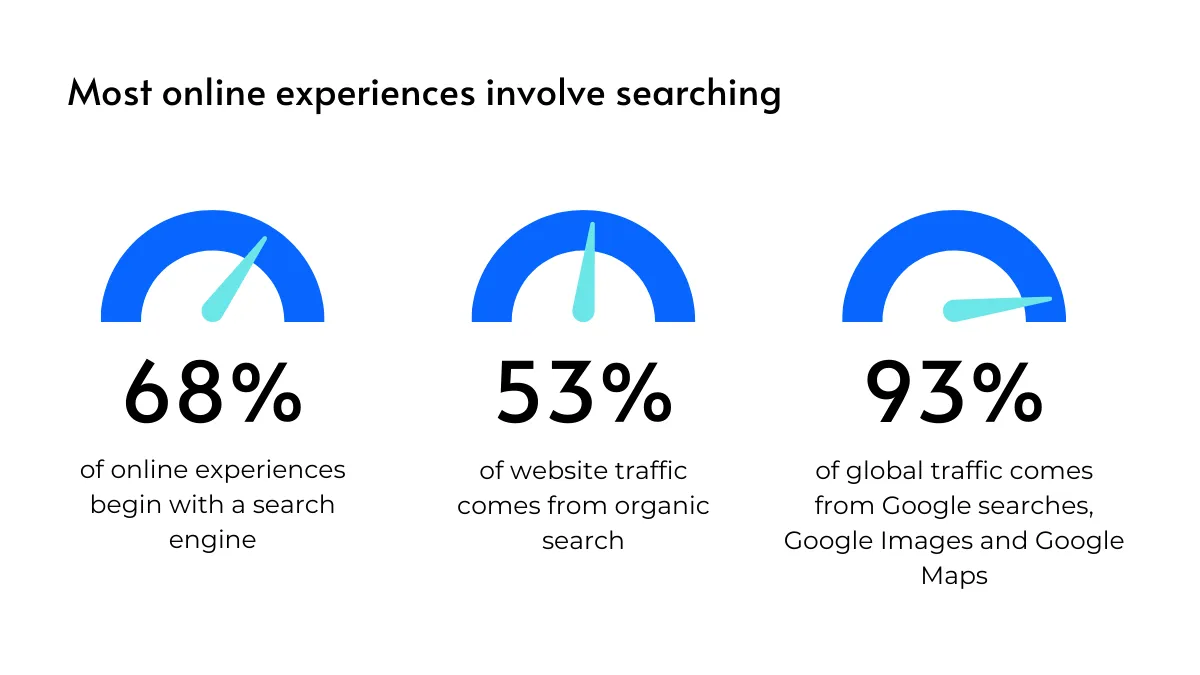
These data points reveal that organic search is a primary traffic source for websites, and Google is the undisputed leader in the search engine market. Hence, focusing on Google SEO is paramount.
Understanding the Internet
Imagine the modern internet as a massive city spanning various regions, with over 6 billion people living in this city.

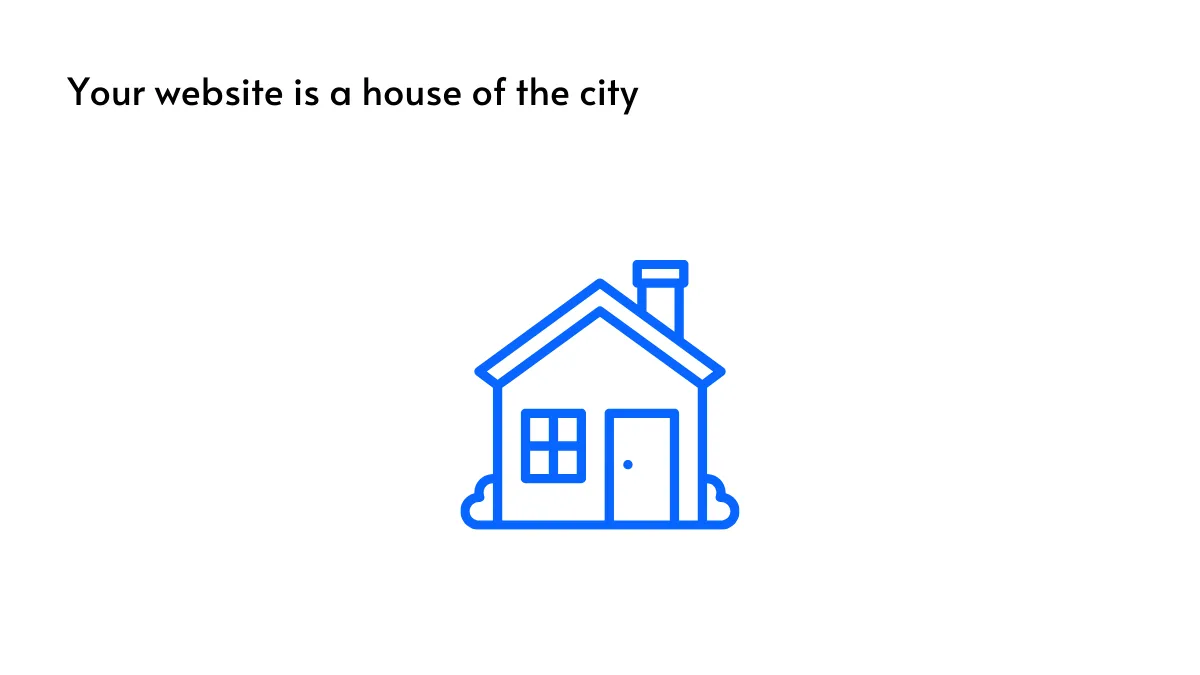
Your website is a house within this city of billions.
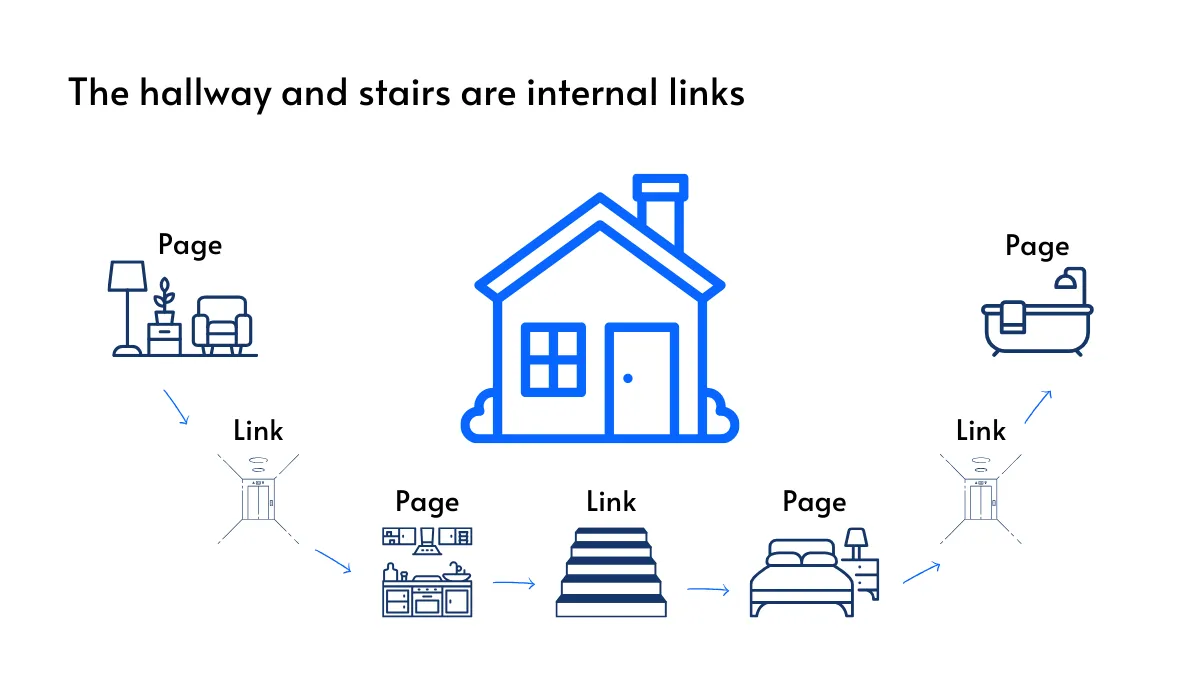
The bedrooms, living rooms, bathrooms, and kitchens in your house are analogous to different pages on your website, such as product pages, blog pages, contact pages, and about us pages.
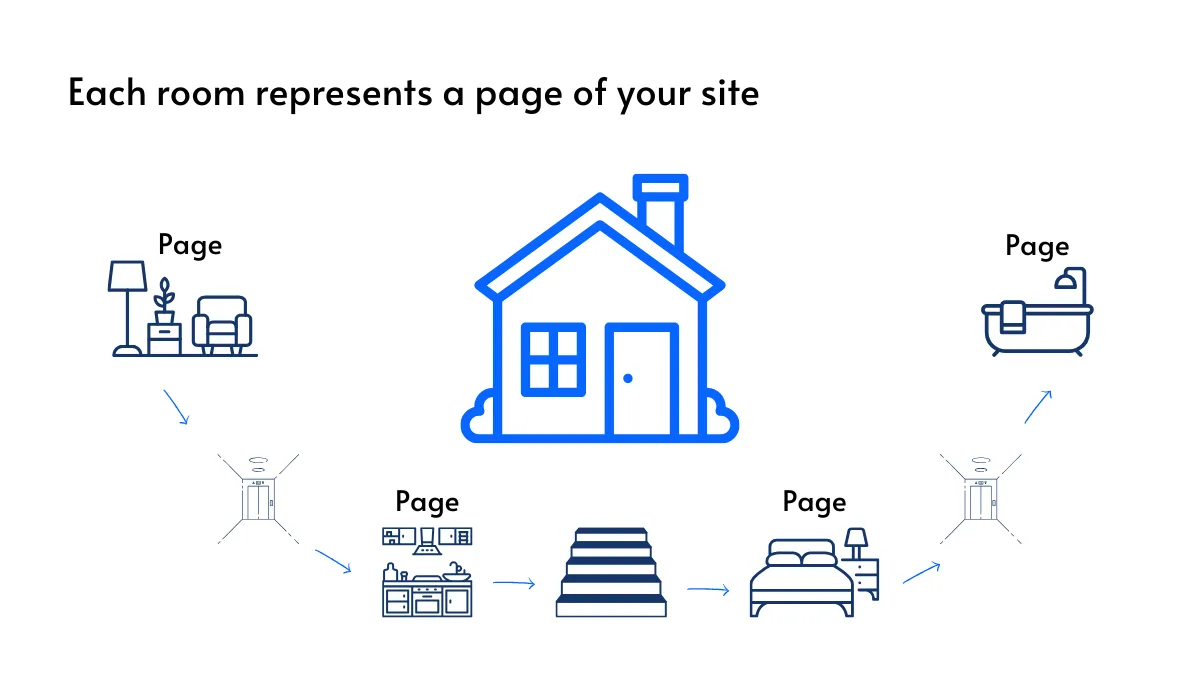
The corridors and staircases connecting these rooms represent internal links on your website.
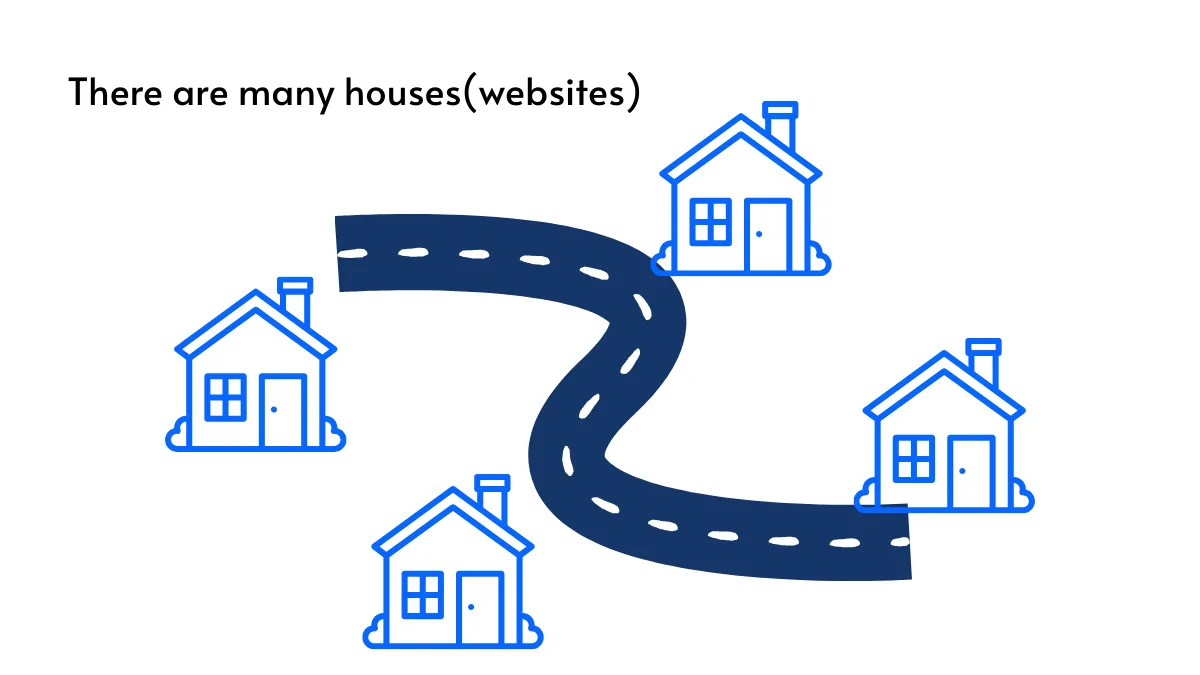
Now, look outside your house; there are numerous other houses along the streets, each representing a different website.
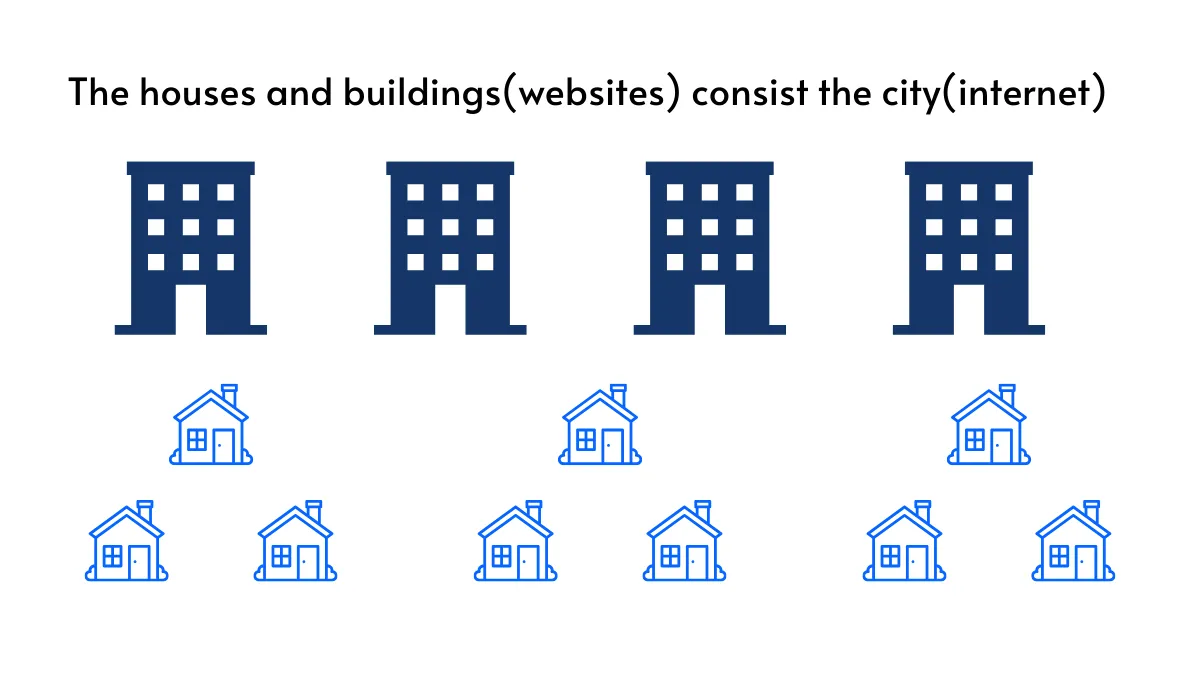
Houses and buildings make up cities, and websites, large and small, make up the Internet.
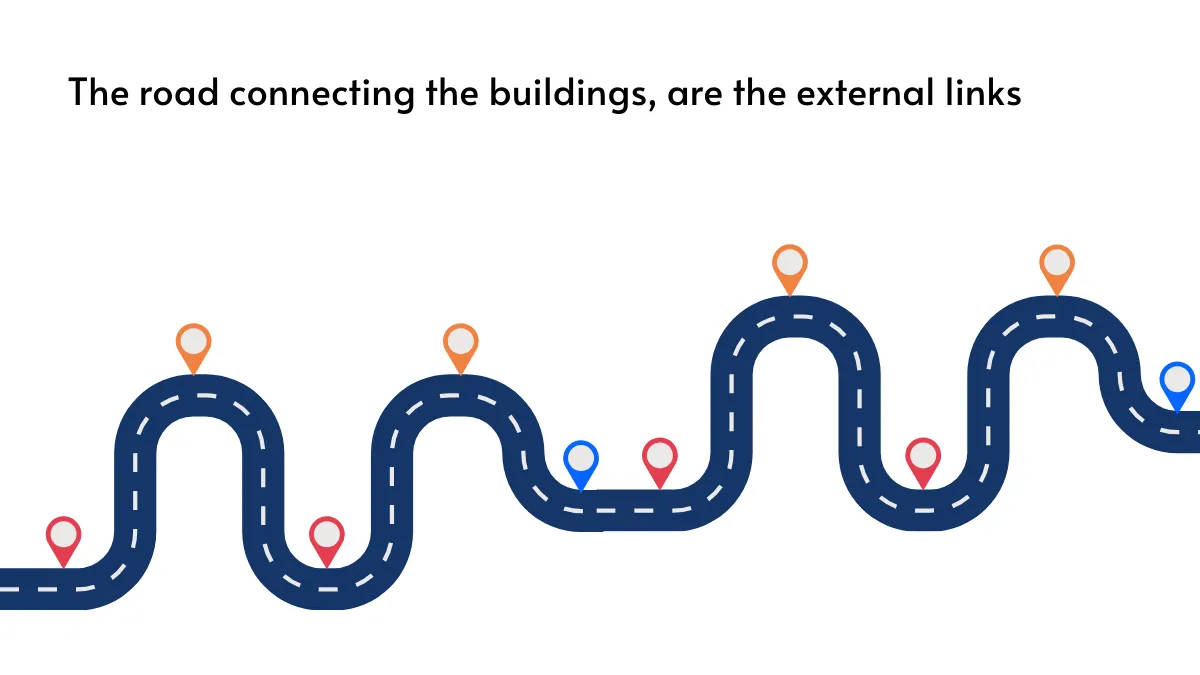
The streets connecting these houses are like external links.
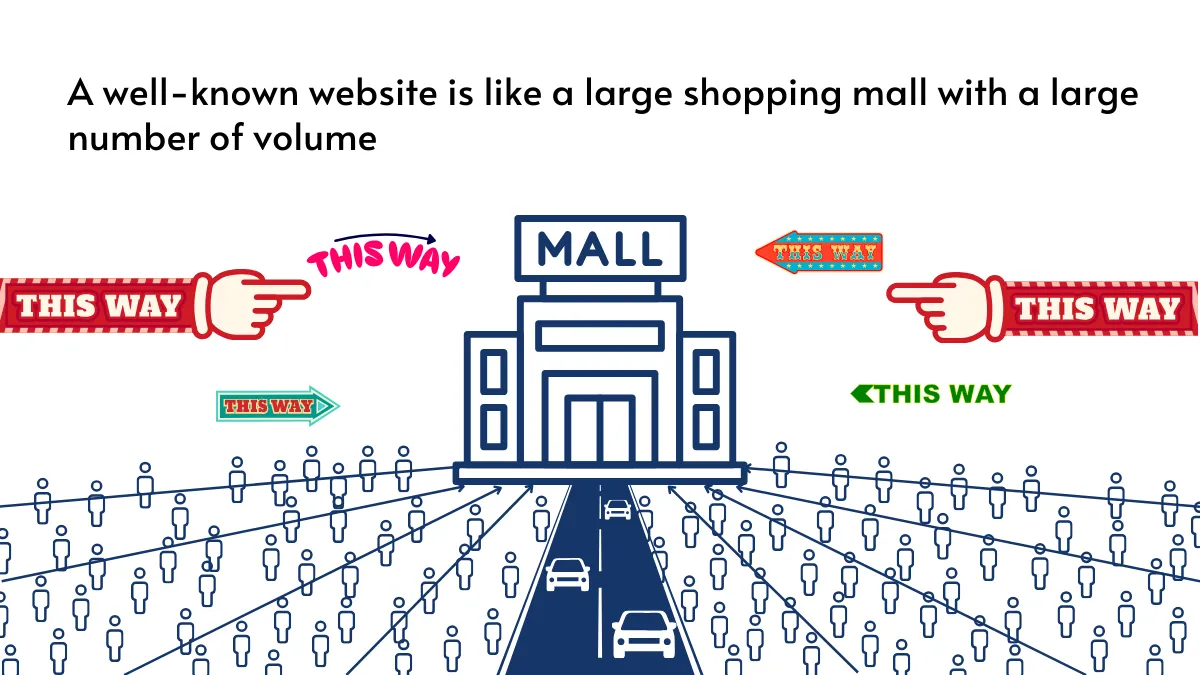
A well-known website is like a large shopping mall that attracts significant traffic from all directions. People visit this mall (website) to shop, browse products, find information, or just wander around, much like users navigating through your website. This mall is well-connected with clear signposts directing people to it, akin to numerous external links leading to your website, making it easy for people to find it.
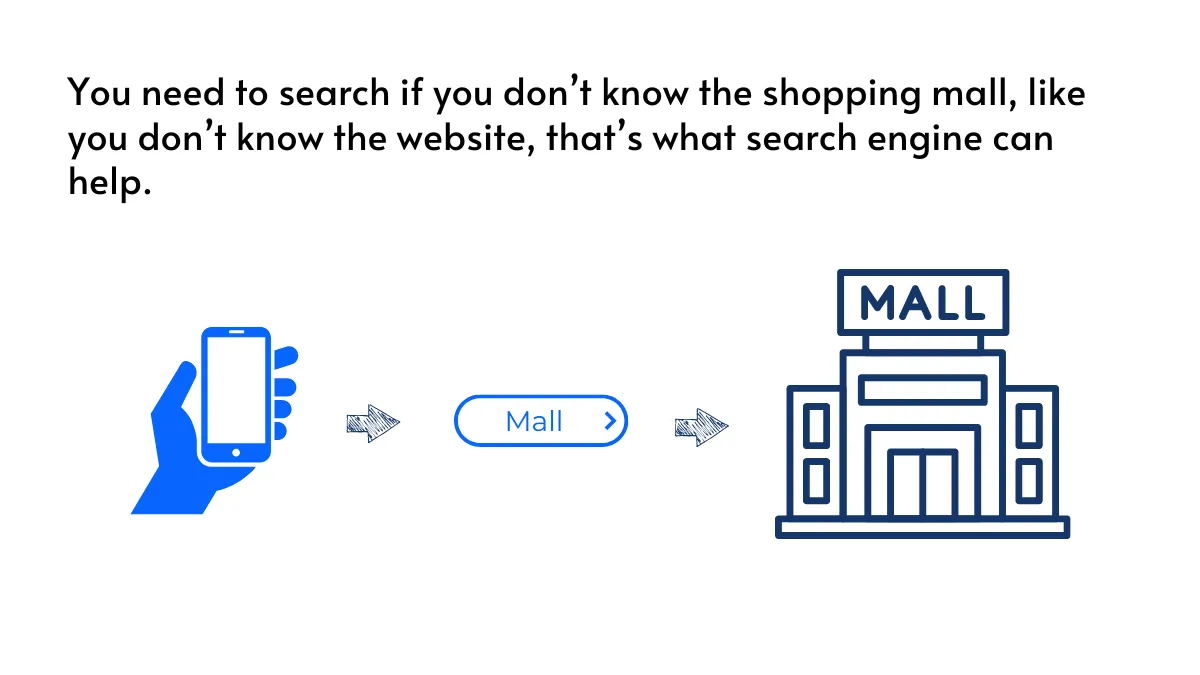
If you know the shopping mall (website), you would directly visit its location (enter the URL). If not, you would search for it using your phone. To find websites, people inevitably use search engines, and among every 10 search engine users, 9 use Google.
What is SEO?
SEO, or Search Engine Optimization, aims to increase the quality and quantity of organic search traffic to a website through various techniques and marketing methods. These include technical SEO, On-Page SEO, and Off-Page SEO, don’t worry, we’ll cover these in detail later.
Google's Quality Rater Guidelines and EEAT
Before diving into SEO practice, it’s essential to understand Google’s EEAT concept, which is the most important in SEO basics.

EEAT stands for Experience, Expertise, Authoritativeness, and Trustworthiness. Here’s a breakdown:
- Experience: Evaluates whether the content creator has real-world experience or practical background. Creators with relevant experience provide deeper and more authentic insights.
- Expertise: Measures the knowledge and skill level of the content creator in the relevant field. Content should be created by individuals with the necessary qualifications and experience to ensure accuracy and comprehensiveness.
- Authoritativeness: Assesses the credibility of the website and the content creator. Sites or authors widely recognized as leading sources in their industry or subject area are considered authoritative.
- Trustworthiness: Evaluates the reliability and integrity of the content and the website. Trustworthiness is built through accurate, honest, and transparent information, as well as secure and user-friendly site practices.
EEAT (Experience, Expertise, Authoritativeness, and Trustworthiness) is a standard used by Google to assess the quality of website content. Google evaluates content based on these criteria to determine its ranking in search results. Although Google does not disclose specific scoring rules and algorithm details, it is clear that EEAT plays a crucial role in content evaluation. Especially for YMYL (Your Money or Your Life) content, such as finance and health-related topics, Google’s EEAT standards may be higher. This means content written by professional doctors or financial experts is likely to score higher in EEAT evaluations due to their experience and expertise.
Applying EEAT to SEO
Understanding Google’s EEAT standards helps in creating high-quality website content. Emphasizing the experience and expertise of content creators is a key factor in improving content ranking. Many website operators often overlook this aspect, even ignoring content creator information. The correct approach should include:
Highlighting Content Creator Information:
- Include the author’s name and biography at the beginning or end of each article.
- Highlight the author’s experience and professional background, showcasing their qualifications and achievements.
Enhancing Content Creator Credibility:
- Mention relevant professional certificates, degrees, or work experience.
- Provide links or references to other authoritative content published by the author to enhance credibility.
SEO Optimization of Author Pages:
- Create dedicated author pages detailing each author’s background, experience, and expertise.
- Use structured data (e.g., Schema.org’s Author markup) to help search engines better understand and display author information.
Encouraging Interaction Between Content Creators and Users:
- Engage with readers through comments or social media, answering questions and providing additional professional advice.
- This not only increases user trust but also improves content interaction and user retention.
By following these practices, you can enhance the quality of your website content, highlight the professional background and experience of content creators, and improve your ranking in search results. These practices align with Google’s EEAT standards, helping to boost your overall SEO effectiveness.
Focus on Users, Not Search Engine
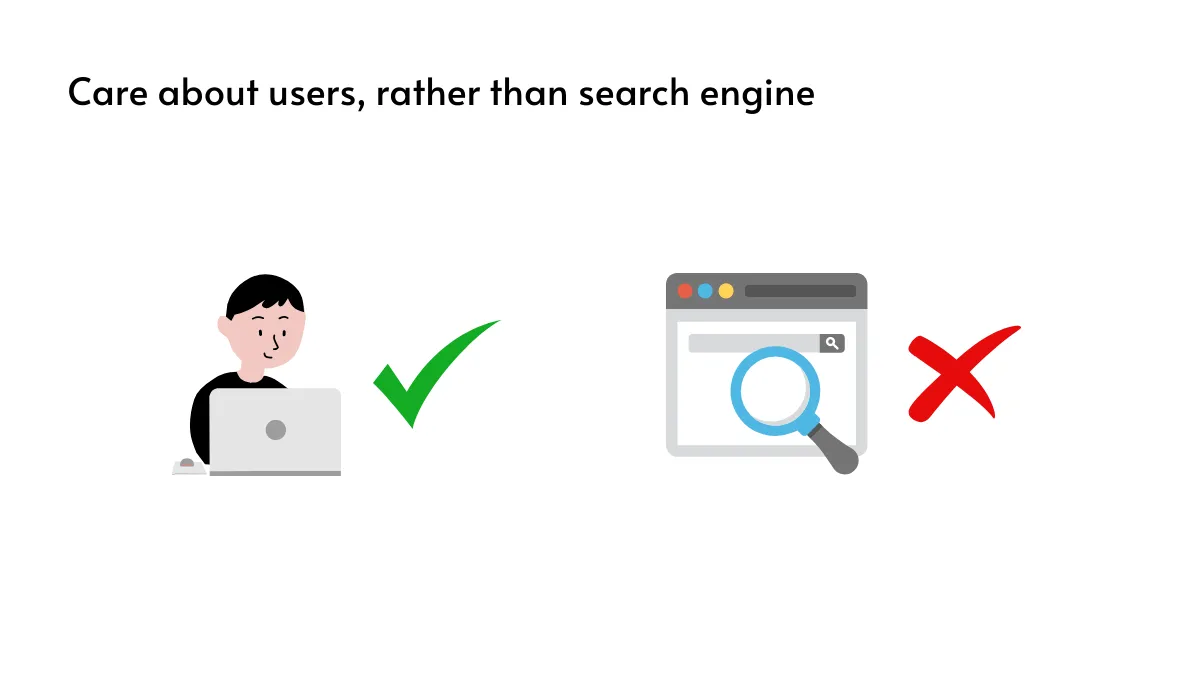
When doing SEO, we should prioritize users over search engines, as Google has always advocated. When Google presents high-quality content to users, and users are satisfied with the information, they continue to trust Google’s ranking algorithm. Conversely, if a website tricks Google’s algorithm with various techniques to achieve high rankings, but provides low-quality content, users will lose trust in Google’s ranking system, potentially reducing their loyalty to Google. Even if such websites achieve high rankings, if users find the content unhelpful and leave quickly, the SEO effort is meaningless. In the long run, this approach harms the website.
In contrast, user-centric SEO strategies may take longer to show results but can win users’ trust and recognition, earning rewards from Google’s search algorithm, leading to sustained traffic and a good reputation, ultimately achieving long-term success. Therefore, we should adhere to user-centric SEO strategies rather than focusing solely on search engines.
Google's Algorithm Updates
1998-2009: Early Updates
- 1998: Backrub – The precursor to Google, created by Larry Page and Sergey Brin, using the PageRank algorithm to evaluate the importance of web pages based on their linking relationships.
- 2000: Google Toolbar – Introduced a toolbar for browser-integrated Google searches and PageRank visibility.
- 2003: Boston – The first official algorithm update combining index updates and algorithm changes, significantly affecting search results.
- 2003: Cassandra – Addressed link quality issues and hidden text and links, enhancing relevance and quality.
- 2003: Dominic – Improved indexing and crawling processes.
- 2003: Esmeralda – Further refined indexing and page ranking.
- 2003: Fritz – Changed index updates to a daily basis (Everflux), making results more dynamic and timely.
- 2003: Florida – Introduced stricter anti-spam algorithms, impacting many sites.
- 2004: Austin – Further cracked down on hidden text and invisible meta tags.
- 2004: Brandy – Emphasized anchor text importance and expanded semantic search.
- 2005: Allegra – Adjusted sandbox effect and link filtering.
- 2005: Bourbon – Improved duplicate content filtering and link quality assessment.
- 2005: Jagger – Strengthened anti-spam measures.
- 2005: Big Daddy – Enhanced technical infrastructure for better handling of redirects and URL normalization.
- 2006: Vince – Optimized brand weight and trust.
- 2009: Caffeine – Introduced a new indexing system for faster indexing and more timely search results.
2010-2015: Major Updates
- 2010: May Day – Targeted long-tail keywords for better handling and ranking.
- 2011: Panda – Targeted low-quality content farms, rewarding high-quality content.
- 2012: Venice – Strengthened local search results.
- 2012: Penguin – Focused on spammy links and over-optimization.
- 2013: Hummingbird – Improved natural language processing and semantic search.
- 2014: Pigeon – Enhanced local and traditional search integration.
- 2015: Mobilegeddon – Prioritized mobile-friendly sites.
- 2015: RankBrain – Introduced machine learning for better query processing.
2016-2022: Machine Learning and AI Era
- 2016: Possum – Improved local search results.
- 2017: Fred – Targeted low-quality content and ad-heavy sites.
- 2018: Mobile-First Indexing – Prioritized mobile version content for indexing and ranking, ensuring optimal experiences for mobile device users.
- 2018: Medic – A core algorithm update that significantly impacted medical and health-related websites, focusing on the quality and reliability of the content.
- 2019: BERT – Implemented natural language processing models to better understand search query context and semantics, improving the handling and matching of complex search queries.
- 2020: May 2020 Core Update – A broad core algorithm update aimed at improving overall search result quality, affecting website rankings across various industries.
- 2021: Page Experience Update – Introduced Core Web Vitals, focusing on page loading speed, interactivity, and visual stability, enhancing user experience.
- 2021: Product Reviews Update – Emphasized high-quality product reviews, targeting low-quality, uninformative reviews to improve product review reliability.
- 2022: March 2022 Product Reviews Update – Further refined product review quality evaluation to ensure users receive more reliable and useful product information.
- 2022: May 2022 Core Update – Another broad core algorithm update focused on improving search result quality and relevance.
- 2022: Helpful Content Update – Encouraged the creation of genuinely useful content for users, targeting low-quality SEO content to enhance user experience in search results.
- 2022: December 2022 Link Spam Update – Strengthened link spam detection and handling to ensure fairness and credibility in search results.
2023-2024: Latest Updates
- January 2023 Core Update – A broad core algorithm update aimed at improving the quality and relevance of Google search results, affecting rankings across multiple industries, with a focus on content quality and user experience.
- March 2023 Product Reviews Update – Further refined product review quality standards to ensure users receive reliable and useful information when searching for product reviews, penalizing low-quality content.
- May 2023 Core Update – A comprehensive core algorithm update to enhance search engine performance and search result relevance, focusing on originality and authority of content, significantly impacting sites relying on low-quality content and spammy links.
- July 2023 Link Spam Update – Strengthened link spam detection and handling using advanced AI technology, accurately identifying and dealing with spammy links, ensuring fairness and credibility of search results.
- October 2023 Spam Update – Focused on combating search spam, further cleaning up sites relying on black-hat SEO techniques and spammy content, enhancing user search experience.
- January 2024 Core Update – The first core algorithm update of the new year, aiming to further improve search result quality and user experience, focusing on content relevance and meeting user needs, adjusting sites not meeting quality standards.
- March 2024 Helpful Content Update – Emphasized the importance of useful content for users, encouraging sites to create genuinely helpful content rather than low-quality SEO content, significantly impacting sites relying on content farms and low-quality SEO strategies.
- May 2024 Core Update – A broad core algorithm update to further enhance the relevance and accuracy of search results, refining algorithms to better understand user search intent and needs, adjusting sites not meeting quality standards.
- July 2024 AI Integration Update – Introduced more AI technologies, further enhancing search engine intelligence, better understanding complex search queries and user intent, improving search result precision and relevance.
- September 2024 Core Update – A new core algorithm update to continue improving search result quality and user experience, focusing on content authority and authenticity, adjusting sites relying on misinformation and misleading content.
Understanding and implementing SEO basics is crucial for any website aiming to succeed in today’s digital landscape. By focusing on high-quality content, emphasizing the experience and expertise of content creators, and adhering to Google’s EEAT standards, websites can achieve better search engine rankings and long-term success. Always prioritize users over search engines, and adopt a user-centric SEO strategy to build trust, credibility, and sustained traffic. As Google’s algorithms continue to evolve, staying informed about updates and best practices will ensure your SEO efforts remain effective and aligned with industry standards.