
Understanding Google SEO
Focusing on enhancing a website’s visibility in search engine results, Search Engine Optimization (SEO) is a strategy employed to drive increased organic traffic. Specifically, Google SEO entails optimizing websites for Google’s search algorithms.
Tracing its origins to the 1990s, when search engines began to emerge as key tools for accessing information, SEO has evolved to become a vital component in the field of marketing.
SEO’s primary goal is to boost natural search rankings and traffic, setting it apart from Pay-Per-Click (PPC) advertising. SEO, in conjunction with PPC, constitutes the broader category of Search Engine Marketing (SEM).
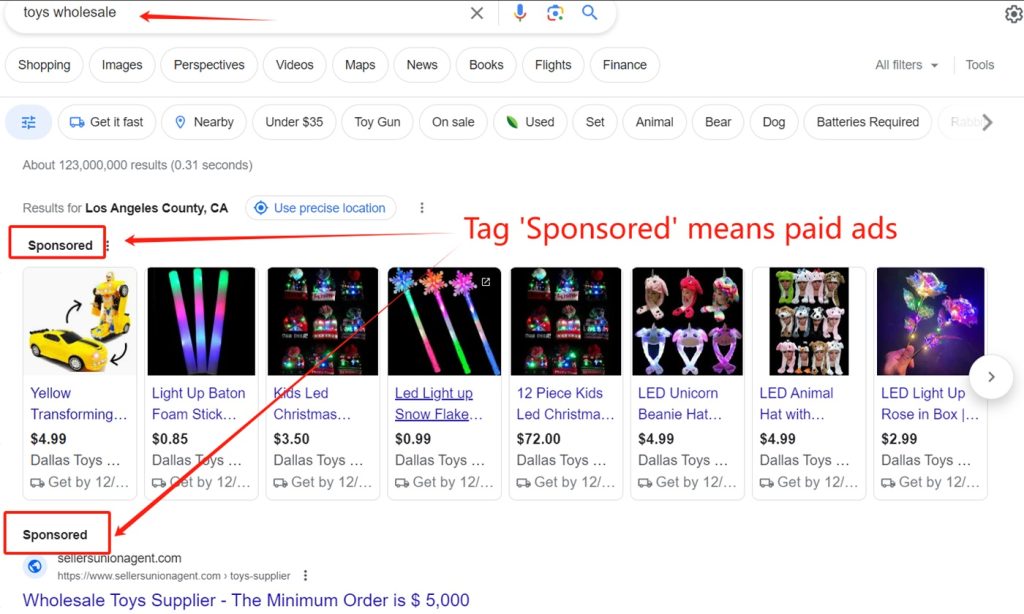
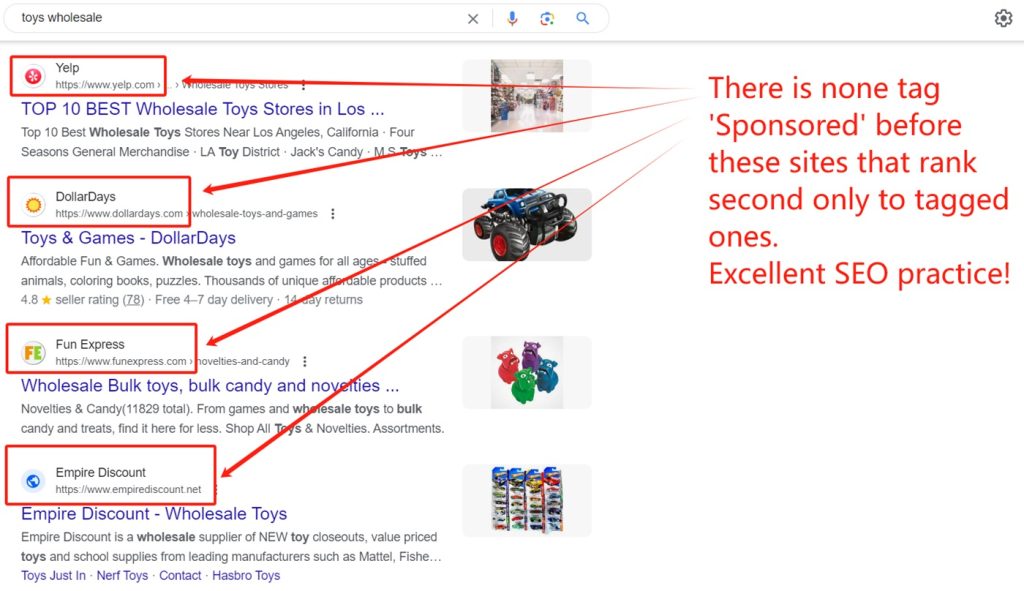
In Google’s search results, entries with an “Sponsored” label signify paid ads, while those without the label indicate organic search rankings.
Key Factors Influencing Google SEO
In the realm of Google SEO, numerous factors can impact its effectiveness. While Google’s search algorithm remains highly confidential, with its specific components and operational rules undisclosed, over 200 ranking factors have been speculated by external sources. Among these, three key aspects are widely recognized as having significant influence:
A Well-Structured Website:
- Having a website with a clear, logical layout facilitates easier navigation for both users and search engines. For instance, a site with well-defined categories, a sitemap, and efficient internal linking makes it easier for Google to index and understand the website’s content.
Valuable Content for Users:
- Delivering content that is both informative and engaging to users is crucial. An example of this is a comprehensive blog post that answers common questions in your industry, enriched with relevant keywords, images, and possibly infographics to enhance reader engagement and understanding.
Backlinks from High-Authority Websites:
- Gaining links from reputable and authoritative websites can significantly boost SEO. For example, a mention and link from a well-known industry leader’s website not only drives traffic but also signals to Google the credibility and relevance of your content.
These factors collectively contribute to the overall SEO strategy, with each playing a distinct role in enhancing a website’s visibility and ranking in Google search results.
Essential Google SEO Terminology
As implied by their names, On-Page SEO involves optimization strategies within a website, while Off-Page SEO encompasses tactics executed outside the website.
(1) On-Page SEO
On-page SEO encompasses all optimization efforts directly on the website itself, including:
- Keyword Analysis: Identifying optimal keywords for targeting.
- Content Optimization: Enhancing content for both user engagement and search relevance.
- Page Optimization: Improving individual web pages for better performance in search results.
- Structural Optimization: Streamlining website architecture for easier navigation and indexing.
(2) Off-Page SEO
Off-Page SEO mainly focuses on acquiring high-quality backlinks, with common methods being:
- Publishing articles on external sites.
- Submitting comment backlinks.
- Leveraging competitors’ broken links, among others.
Both On-Page and Off-Page SEO are crucial for SEO success, and neither can be overlooked in a comprehensive SEO strategy. Additionally, Off-Page SEO is closely linked with online marketing areas like social media and brand marketing. Signals from social media engagement and brand recognition can indirectly boost a website’s perceived value in search engines.
(3)White Hat SEO
White Hat SEO aligns with Google’s Webmaster Guidelines, employing conventional, safe methods to enhance a website’s search engine ranking. This approach is a long-term strategy, resulting in stable and enduring search rankings:
- Quality Content Creation: Producing original, informative, and engaging content that genuinely adds value for users.
- Keyword Research and Effective Use: Identifying relevant keywords through research and incorporating them naturally into content.
- Mobile-Friendly Website Design: Ensuring the website is responsive and provides a good user experience on mobile devices.
- Proper Use of Meta Tags: Accurately using title tags and meta descriptions that reflect the content of the page.
- Building Quality Backlinks: Gaining backlinks from reputable sources through genuine partnerships, guest blogging, or high-quality content.
(4)Black Hat SEO
Black Hat SEO exploits loopholes in search engine algorithms through deceptive practices. While these tactics might catapult a website to the top of search results temporarily, they are often quickly detected by search engines, leading to penalties or bans:
- Keyword Stuffing: Overloading webpages with keywords in an unnatural way, aiming to manipulate search engine rankings.
- Cloaking: Presenting different content or URLs to search engines and users, which is deceptive and violates search engine guidelines.
- Hidden Text or Links: Including text or links in the content that are invisible to users but crawlable by search engines, often by using the same color font as the background.
- Link Farms: Participating in networks created solely for the purpose of increasing backlinks artificially.
- Duplicate Content: Copying content from other websites or using software to slightly modify existing content and present it as new.
Thus, White Hat SEO focuses on ethical practices and sustainable growth, whereas Black Hat SEO takes risks with quick, often short-lived gains at the expense of long-term stability.
Effective Strategies for Google SEO
Search engines, including Google, rely on intricate algorithms to rank websites, and these algorithms are constantly evolving. Google’s algorithm is increasingly moving away from manual intervention, improving through self-learning. Thus, Google SEO can no longer be manipulated with old tactics like link spamming, as the algorithm has advanced far beyond its original programming.
SEO depends on search engine technologies, and effective Google SEO strategies must adapt to the current dynamics of Google’s algorithm. Some factors, however, remain consistently important regardless of these changes. Google has always emphasized the quality of websites and continually enhances its algorithm to better understand and assess them. High-quality websites are those deemed worthy of being recommended to search users.
Optimizing a website helps Google comprehend its content and facilitates its inclusion in search results. Importantly, SEO isn’t just about optimizing for search engines; it’s ultimately about enhancing user experience, which aligns with Google’s goals.
Google’s introduction of semantic structures and rich snippets aims to better recognize and improve the quality of search results. Simplifying Google SEO, it’s all about creating value for users. A valuable website gains authority, which, when effectively distributed to keywords, leads to better rankings.
The core value of a website stems from its content – the information users gain. Understanding user needs and providing the desired content is the strongest driving force for a website’s longevity. While content is crucial for Google SEO, it alone isn’t sufficient. Other factors like logical website layout, effective link weight distribution, and external factors contributing to a site’s authority also play a significant role in ranking.
Therefore, the synergy of SEO and content is key to achieving favorable Google rankings. Continual content updates are advised, as Google prefers a “living” website over a “dead” one.
Planning Ahead for Google SEO Success
It’s imperative to emphasize that SEO considerations should be integrated right from the onset of website development. This strategic approach ensures that the website is fundamentally aligned with SEO best practices. Key aspects to focus on include:
A Well-Structured Website:
- The architecture of a website plays a critical role in its SEO success. A well-organized site with a clear hierarchy not only enhances user experience but also aids search engines in crawling and indexing content efficiently. This involves having a logical navigation menu, proper use of header tags, and a clear sitemap.
A Mobile-Responsive Website:
- With the increasing predominance of mobile browsing, having a website that adapts seamlessly to various screen sizes is not just an option but a necessity. Mobile responsiveness is a significant factor in Google’s ranking algorithms. Ensuring your site is mobile-friendly enhances user engagement and helps in achieving better search rankings.
Choosing an SEO-Savvy Website Builder:
- Collaborating with a website builder or developer who has a deep understanding of SEO principles can be a game-changer. They can ensure that the website is optimized from the ground up, encompassing technical SEO elements like fast loading speeds, optimized images, and clean, SEO-friendly code. Know Our SEO-Friendly Web Design Service.
By incorporating these essential elements during the website building process, you lay a solid foundation for your site’s future SEO success. This proactive approach not only aligns with Google’s evolving algorithms but also paves the way for sustained online visibility and growth.