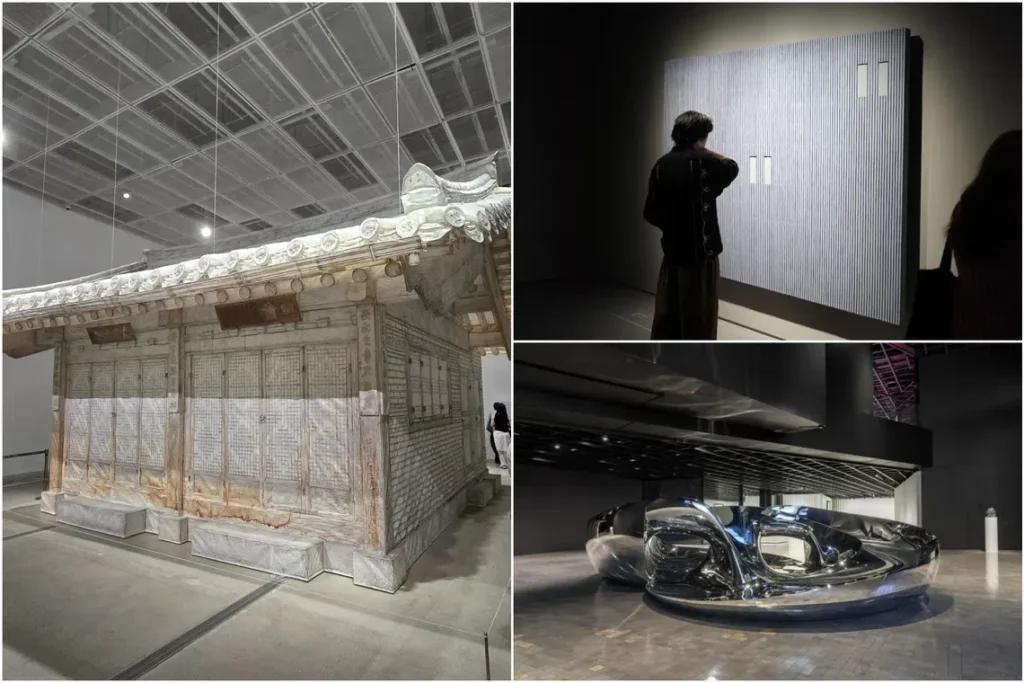
Three major Seoul solo shows from Do Ho Suh, Park Seo-Bo, and Koo Jeong A close out 2026. Here is why the way these exhibitions get documented online matters well beyond the art world.
The Straits Times has flagged three major solo exhibitions in Seoul running before the end of 2026, featuring Do Ho Suh, Park Seo-Bo, and Koo Jeong A. The piece is a cultural calendar item, and on its face it has nothing to do with web technology. That is exactly why it is worth reading from a marketer’s or developer’s chair.
What is actually happening
The Straits Times published a guide to three solo exhibitions by South Korean artists in Seoul, all scheduled to close before the end of 2026. The artists named are Do Ho Suh, Park Seo-Bo, and Koo Jeong A. The piece is framed as a list of shows worth seeing in the city before the year runs out.
That is the whole of the reported substance. No attendance figures, no ticket data, no institutional statements, no digital strategy announcements. Just three names, one city, and a deadline.
Why a cultural listing is a search and content problem
Exhibitions are the most perishable content category there is. A show runs for a fixed window, generates a spike of interest, and then the page that described it becomes a dead link or a stale listing that ranks for a query nobody should be served anymore. Multiply that by every museum, gallery, and cultural desk in every city, and you get a large slice of the web that is structurally bad at being found at the right moment and structurally bad at being retired afterward.
For anyone running a site that touches events, travel, or local culture, the Seoul shows are a clean test case. Three artists with genuinely different search profiles sit in the same article. Do Ho Suh has a long international exhibition history and a name that gets transliterated several ways. Park Seo-Bo is associated with a specific movement and a specific generation of Korean art. Koo Jeong A works across media and has a name that search engines have historically handled poorly because of spacing and romanization variance.
That last point is the practical one. If your CMS stores artist names as free text with no canonical field, you are already losing. The same person gets indexed as three different strings, your internal linking never consolidates, and the entity never resolves cleanly for a search engine or an AI answer engine.
The GEO angle nobody is talking about
Generative engine optimization lives or dies on entity clarity. When someone asks an AI assistant what to see in Seoul in late 2026, the answer gets assembled from whatever structured, dated, attributable content the model can find. A listing with a clear exhibition name, a venue, a start and end date, and a canonical artist identifier is usable. A prose paragraph that mentions a name in passing is not.
This is where most cultural institutions and the sites that cover them are still weak. They publish beautiful editorial pages with no machine-readable scaffolding underneath. Then they wonder why the AI summary of “what’s on in Seoul” cites a booking aggregator instead of them.
The fix is unglamorous and cheap. Give every exhibition a stable URL that does not change when the show closes. Mark it up with event schema including start and end dates. Keep the page live after the run ends and change its status rather than deleting it, because the historical record is itself a ranking asset for the next time that artist has a show. Canonicalize artist names in a dedicated field, not in body copy.
What to watch next
The interesting signal will not come from the exhibitions themselves. It will come from how the coverage behaves after the shows close. Watch whether the pages that list these three artists stay reachable, whether they get updated with a closed status, and whether the next round of Seoul exhibition coverage links back to them.
If the pattern holds, most of it will rot. Listings will 404, artist names will fragment further across new articles, and the accumulated record will get thinner every year even as the number of published words goes up. That is the default outcome, and it happens because nobody owns the archive as a product.
For a developer or marketer, the takeaway is not “go see the shows.” It is that event and culture content is a stress test for the parts of your stack you have probably never audited: URL permanence, schema coverage, entity resolution, and what happens to a page after its reason for existing expires. Three names in a Seoul listings piece are a small, concrete prompt to go check whether your own site would survive the same test.
Source: The Straits Times