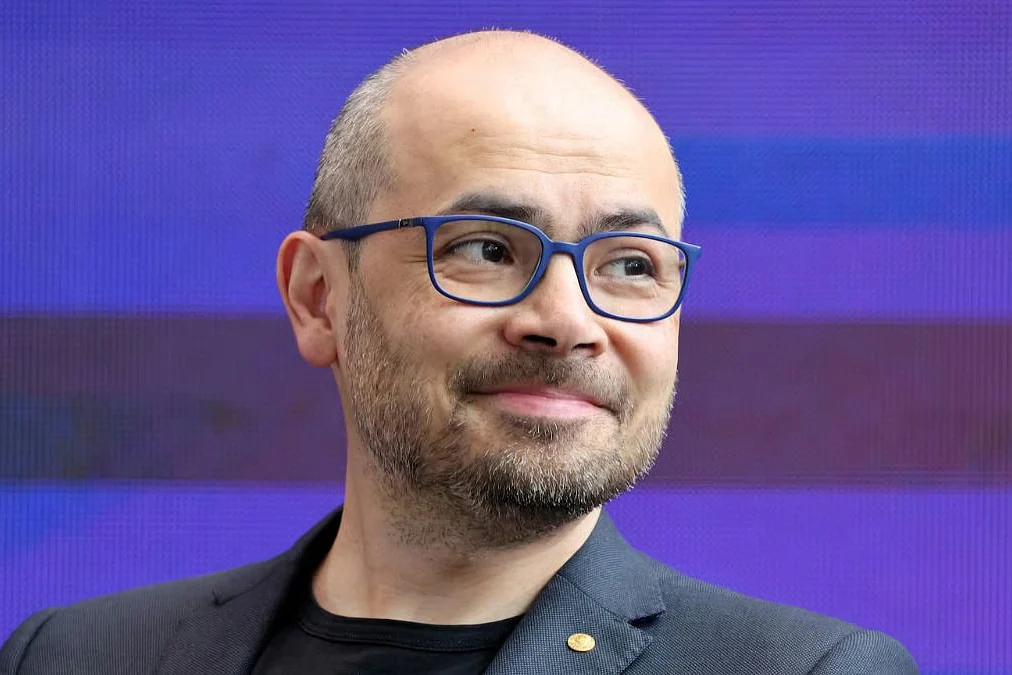
Demis Hassabis has narrowed his AGI timeline to two to three years and proposed an Einstein Test for measuring it. Here's what that shift means for developers and marketers building on AI.
Google DeepMind founder Demis Hassabis now expects artificial general intelligence to arrive within two to three years, a shorter window than he had previously given. Free Press Journal reported the revised forecast on October 22, 2026, along with two details that matter more than the headline number: how he defines the milestone, and how he wants it tested.
What Hassabis actually said
Hassabis described AGI as human-level cognition across a broad range of abilities. That definition is doing a lot of work. It rules out the narrower reading where a system that beats humans at one task, however impressive, counts as general. The bar is breadth, not a single benchmark score.
He also proposed what he calls an Einstein Test for assessing whether a system has crossed that line, and he said AGI could first transform scientific research, with physics named as an early candidate. The forecast is a revision, not a first estimate. Hassabis has moved his expected date closer, and he is now saying it is soon.
Why a two-year horizon changes how you plan
Forecasts from lab founders are not product roadmaps, and anyone who has watched this field for a few years knows the dates slip. But a two-to-three-year window is short enough to land inside a normal planning cycle. If you are scoping a rebuild, a content strategy, or a hiring plan that runs through 2028, you are now planning across the period when the person running Google’s AI research says general systems may show up.
That does not mean you should bet the roadmap on it. It means the cost of being surprised has gone up. Teams that treat current model capabilities as a fixed ceiling and build workflows around that ceiling are making an assumption their own timeline no longer supports.
The definition matters here too. Human-level cognition across a broad range of abilities is a much higher bar than what most “AI-powered” product copy implies. A tool that drafts decent ad copy or summarizes a support thread is nowhere near it. So the practical question for a developer or marketer is not “is AGI here yet” but “which of my tasks sit close enough to the current frontier that a jump in general capability would change them.” Those are the ones worth designing loosely.
The Einstein Test is the part worth watching
A forecast is cheap. A test is not. Proposing a way to measure general intelligence is a more concrete commitment than naming a date, because it invites other researchers to argue about the method. If the Einstein Test gains traction as a shared benchmark, it becomes something the industry can point at and disagree over in public, which is roughly how useful evaluations get built.
For anyone outside the labs, the signal to track is whether this test gets adopted or quietly dropped. An evaluation framework that survives scrutiny tells you the field is converging on what “general” means. One that fades tells you the definition is still contested, and that any date attached to it is softer than it sounds.
The physics comment points the same direction. Hassabis expects scientific research to be the first domain transformed, not marketing or customer support. That is a reasonable place to start: physics problems have checkable answers, which makes progress easier to verify than in domains where “good enough” is a judgment call. It also means the earliest visible wins from general systems may show up in research labs before they show up in the tools most businesses use day to day.
What to watch next
Three things are worth tracking over the next year. First, whether other senior researchers at Google DeepMind and elsewhere converge on a similar window or push back with longer estimates. A single founder moving a date is a data point; a cluster of them moving together is a trend.
Second, whether the Einstein Test gets formalized. Watch for a paper, a benchmark release, or public discussion of the methodology. That is the difference between a talking point and an evaluation the field can use.
Third, watch for evidence of the scientific-research claim. If AGI-class systems start producing verifiable results in physics or adjacent fields, that is a far stronger signal than any interview. Until then, treat the two-to-three-year window as a serious person’s serious estimate, not a delivery date. Plan for capability to keep climbing faster than your current assumptions allow, and keep the parts of your stack that depend on model behavior easy to swap.
Source: Free Press Journal