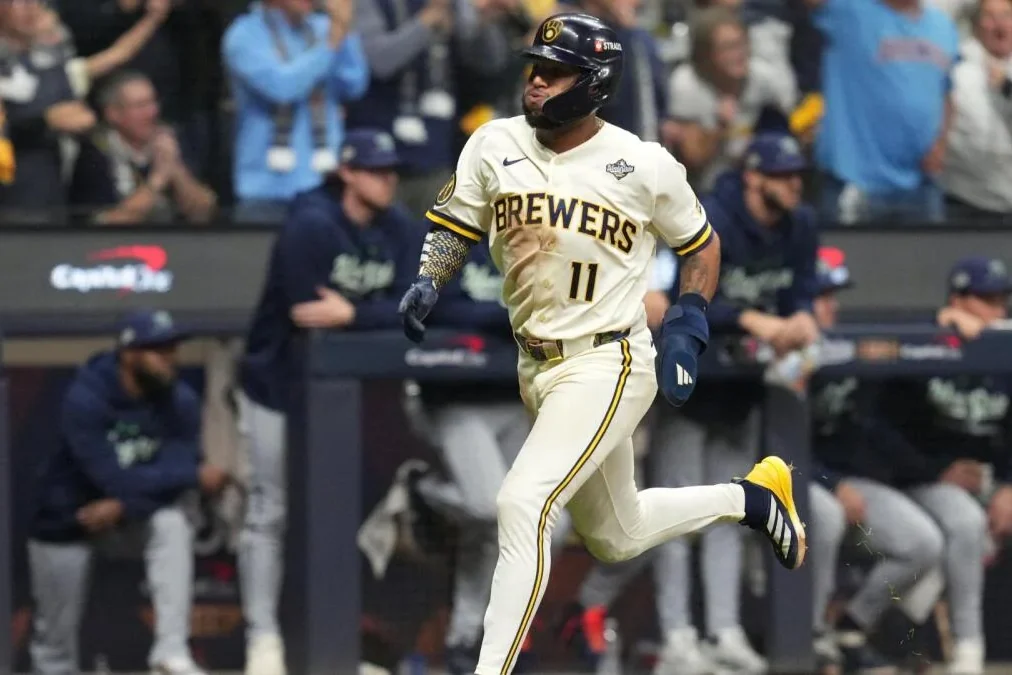
CBS Sports' betting desk is running a 10,000-run simulation of World Series Game 2 as its headline pick. It's a look at how programmatic, data-backed content keeps winning search and AI answer slots.
CBS Sports published a betting preview for Saturday’s Rays vs. Brewers World Series Game 2 built around a SportsLine model that simulated the matchup 10,000 times. The piece carries the usual odds and start-time furniture, but the simulation count is the thing doing the work in the headline and the framing. It’s a pick piece, and the pick’s authority is a number.
What CBS Sports actually put out
The substance is straightforward: CBS Sports’ betting desk published a Game 2 preview for the Rays-Brewers World Series matchup, and the centerpiece is a SportsLine model that ran the game 10,000 times to produce its prediction. The article packages that output with the odds, the start time, and the model’s picks and best bets for the game.
No new data was released about either team. No injury report, no lineup change, no league announcement. The news here is the format: a high-volume simulation presented as the reason to trust the pick, sitting in the headline of a mainstream sports outlet’s betting vertical.
Why a simulation count is a search and answer-engine asset
Think about what a reader types before a World Series game. “Rays Brewers prediction.” “Game 2 pick.” “Who wins Saturday.” Those are low-patience, high-intent queries, and the searcher is comparing several previews that all say roughly the same thing. The outlet that can attach a specific, checkable method to its pick wins the click, because the method is the only differentiator on the page.
That logic gets sharper as more of those queries get answered inside AI surfaces rather than on a results page. A generative answer summarizing “expert picks” needs something to cite. “A model simulated the game 10,000 times” is a citable, self-contained claim. “Our experts like the Rays” is not. If you’re building content that you want pulled into AI Overviews or assistant responses, the lesson is unglamorous but real: attach a number and a method to your conclusion, and you become quotable.
There’s a second-order effect too. Simulation-based previews are cheap to produce at volume once the model exists. Every game on the slate gets a page, every page targets its own long-tail query, and the whole set inherits credibility from the same methodology. That’s programmatic content done with a defensible spine instead of spun filler.
The part that should make you cautious
None of this means the model is right, and CBS Sports isn’t claiming it is. A 10,000-run simulation is a probability distribution, not a forecast of a single game. Baseball in particular is a sport where a well-modeled favorite loses constantly, because one game is a tiny sample and the variance is enormous. The simulation count tells you how many times the model was run, not how good the model is.
That’s the trap for anyone copying the format. If you bolt a big number onto a weak method, you’ve built a credibility liability that a skeptical reader or a fact-checking AI will eventually find. The number has to describe something real: a defined input set, a stated assumption, a reproducible process. Otherwise it’s decoration, and decoration doesn’t survive contact with an audience that can check.
I’d also watch how this plays out editorially. Betting content lives under tighter scrutiny than most verticals, and outlets that lean hard on model output will eventually have to show a track record, not just a run count. The interesting question over the next few months is whether CBS Sports starts publishing the model’s hit rate alongside the picks. If it does, the format matures. If it doesn’t, the 10,000 figure stays a marketing line.
What to take from it if you publish anything
The transferable move isn’t sports. It’s the structure: a specific method, a stated volume of work, and a clear conclusion, all in the first two lines. That structure works for a benchmark post, a pricing analysis, a compatibility test, a survey of 400 developers. It gives search engines something to extract and gives AI systems something to attribute.
The failure mode is the same everywhere. A number without a method is noise. A method without a number is a blog post nobody cites. CBS Sports put both in the headline, and that’s the whole trick.
Source: CBS Sports