Using a cosmetics wholesale B2B site as the example, this article explains how to find SEO keywords through competitors: understanding the four keyword intents, searching for competitor keywords, analyzing traffic and keywords with SEMrush, filtering by KD and traffic, and exporting the list across more competitors.

Keyword placement is the first step of on-page SEO. The keywords you target shouldn’t be invented from scratch based on your product; they should be terms that match both how people search and what you sell. The most efficient source is competitors: find their keyword lists, filter for what fits, and place them on your site.
Below is the full process, using a cosmetics wholesale B2B website as the example.
1. Understand keyword intent
Google search intent usually splits into four types: navigational, informational, commercial investigation, and transactional. For the main keyword cosmetics wholesale, the search terms differ completely by intent:
1. Navigational intent: the user wants to reach a specific brand or site directly. Search terms like Sephora cosmetics wholesale site and MAC cosmetics wholesale website mean they’re heading straight to that brand’s wholesale page.


2. Informational intent: the user wants to learn about a topic. Search terms like what is cosmetics wholesale and how to start a cosmetics wholesale business mean they want to understand what wholesaling is and how to get started.

3. Commercial investigation intent: the user compares options before buying. Search terms like best cosmetics wholesale suppliers and cosmetics wholesale vs retail mean they’re weighing suppliers or figuring out the difference between wholesale and retail.

4. Transactional intent: the user is ready to buy. Search terms like buy cosmetics wholesale and cosmetics wholesale suppliers near me mean they’re looking for a supplier they can order from.

2. Search for competitor keywords
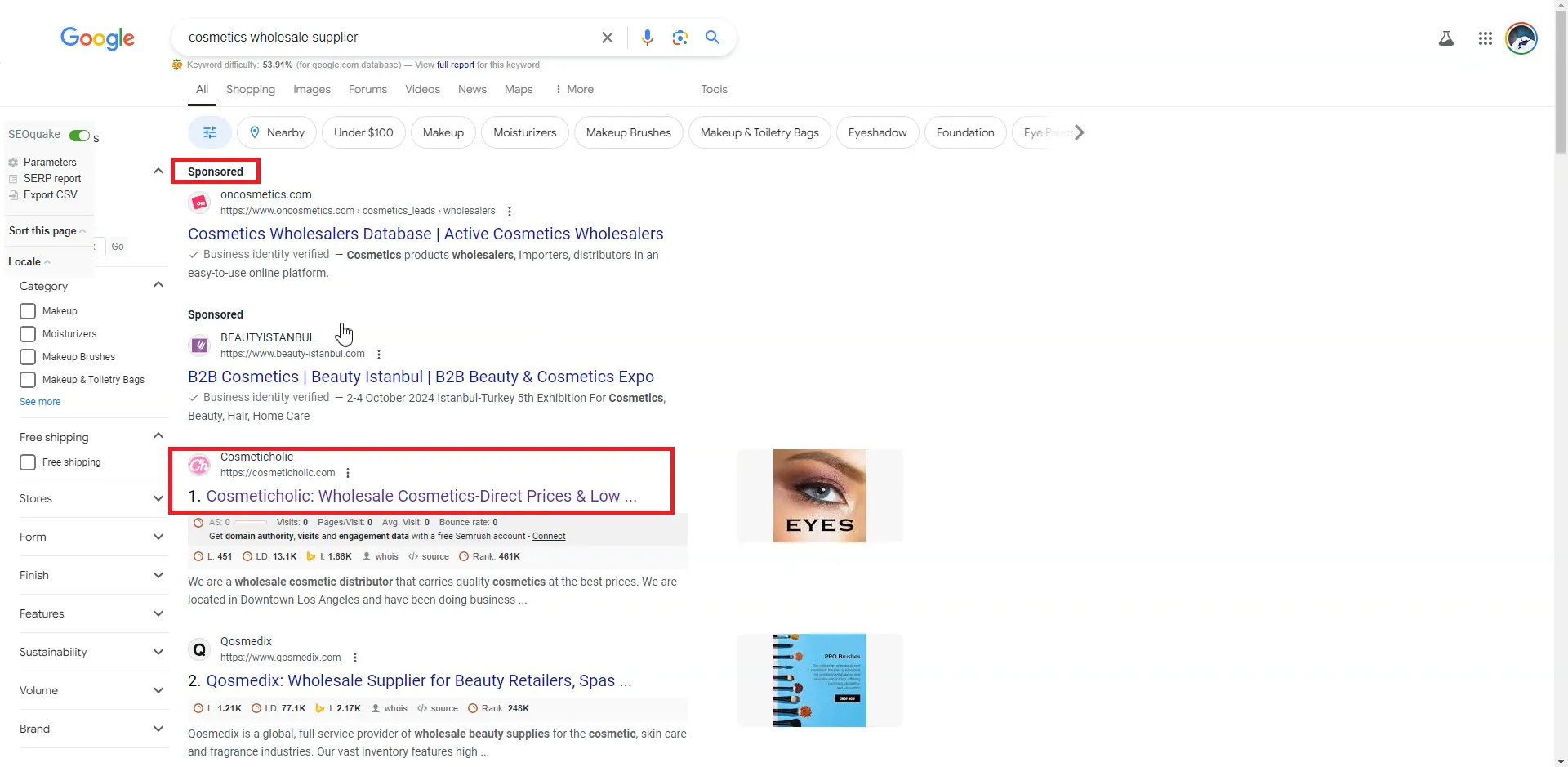
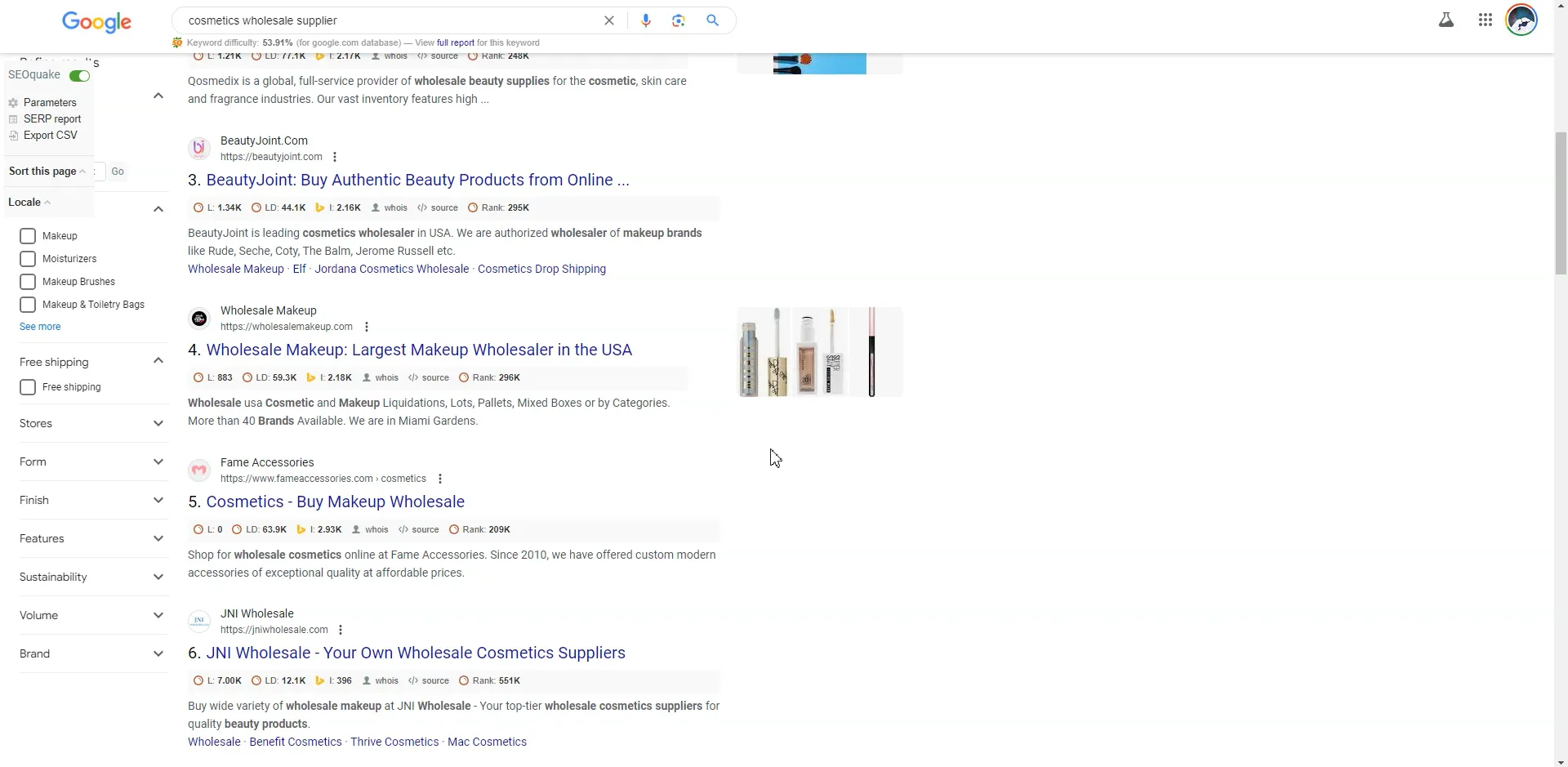
Search cosmetics wholesale supplier with transactional intent. The top two results carry a Sponsored label, meaning they bought Google ads. To find sites ranking on organic strength, click the result without the Sponsored label, because ranking without ads usually means solid SEO foundations.
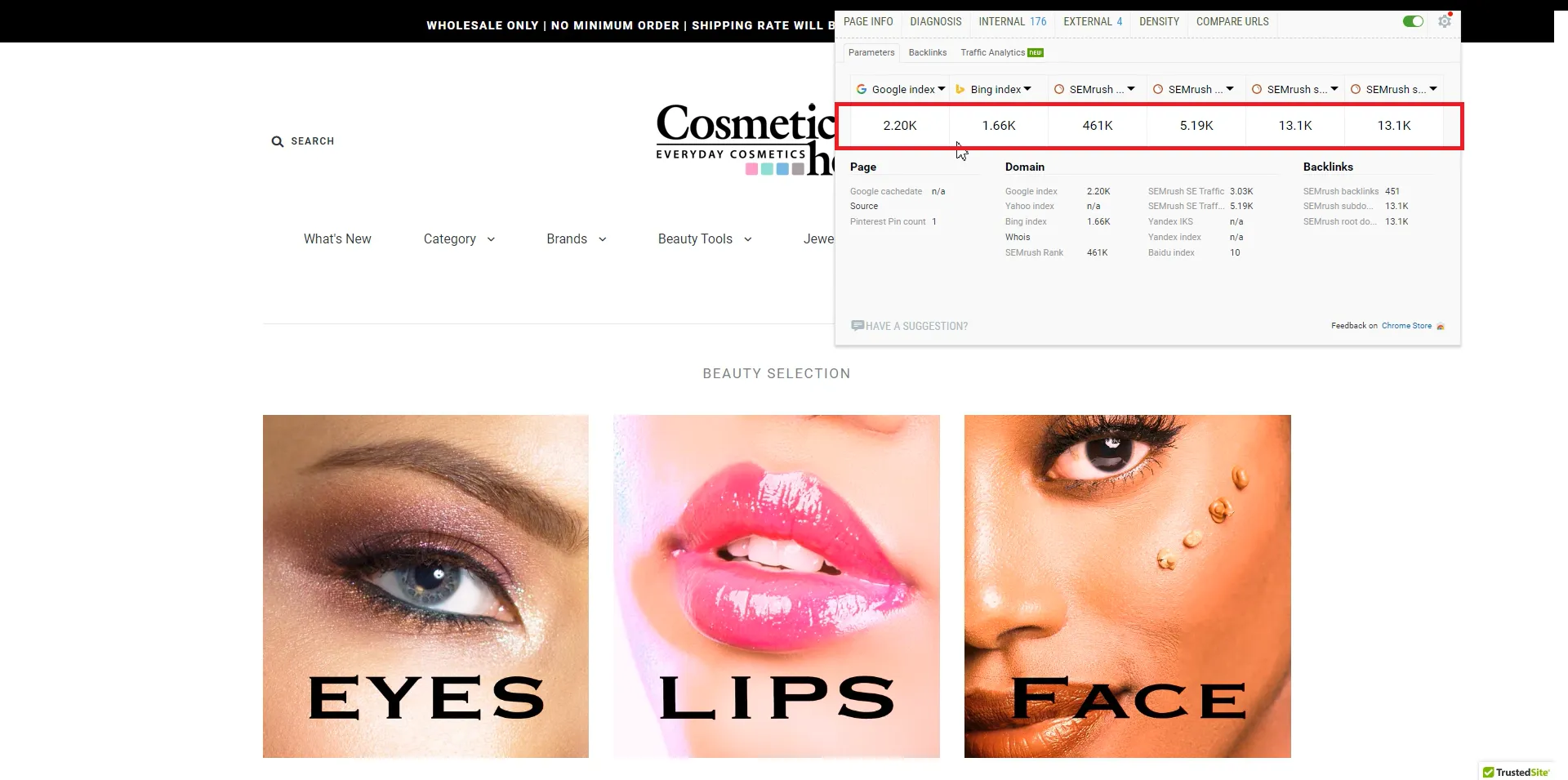
Once inside, run the SEOquake browser extension for a quick read of the site’s SEO data: both Google and Bing index counts are high, SEMrush Rank and SE Traffic Price are low, and backlinks are numerous, which signals a well-built SEO profile. Next, use a fuller tool to inspect its traffic and keywords.
3. Analyze keywords with SEMrush
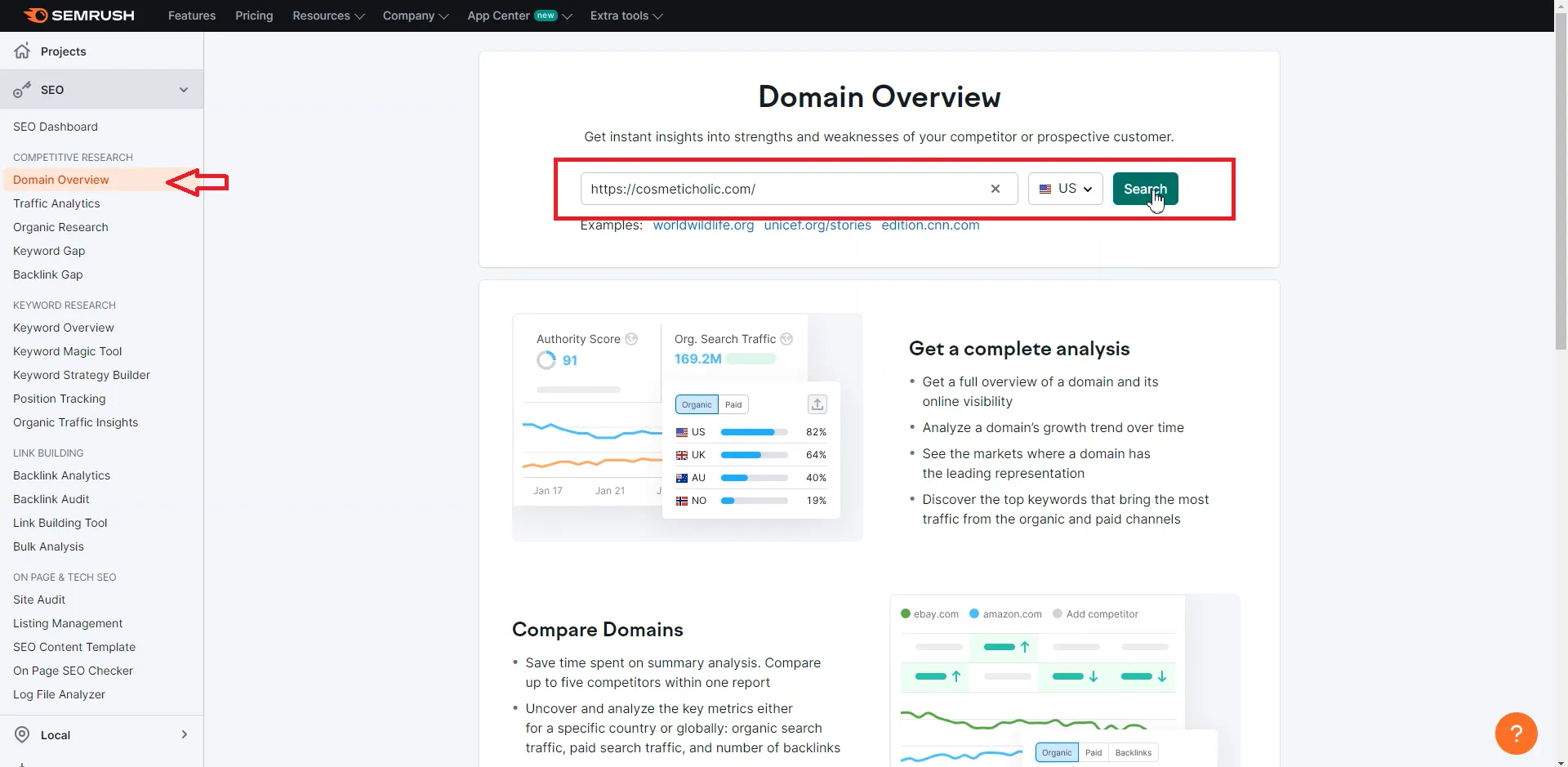
Open SEMrush, click Domain Overview, enter the domain, pick a country, and search.
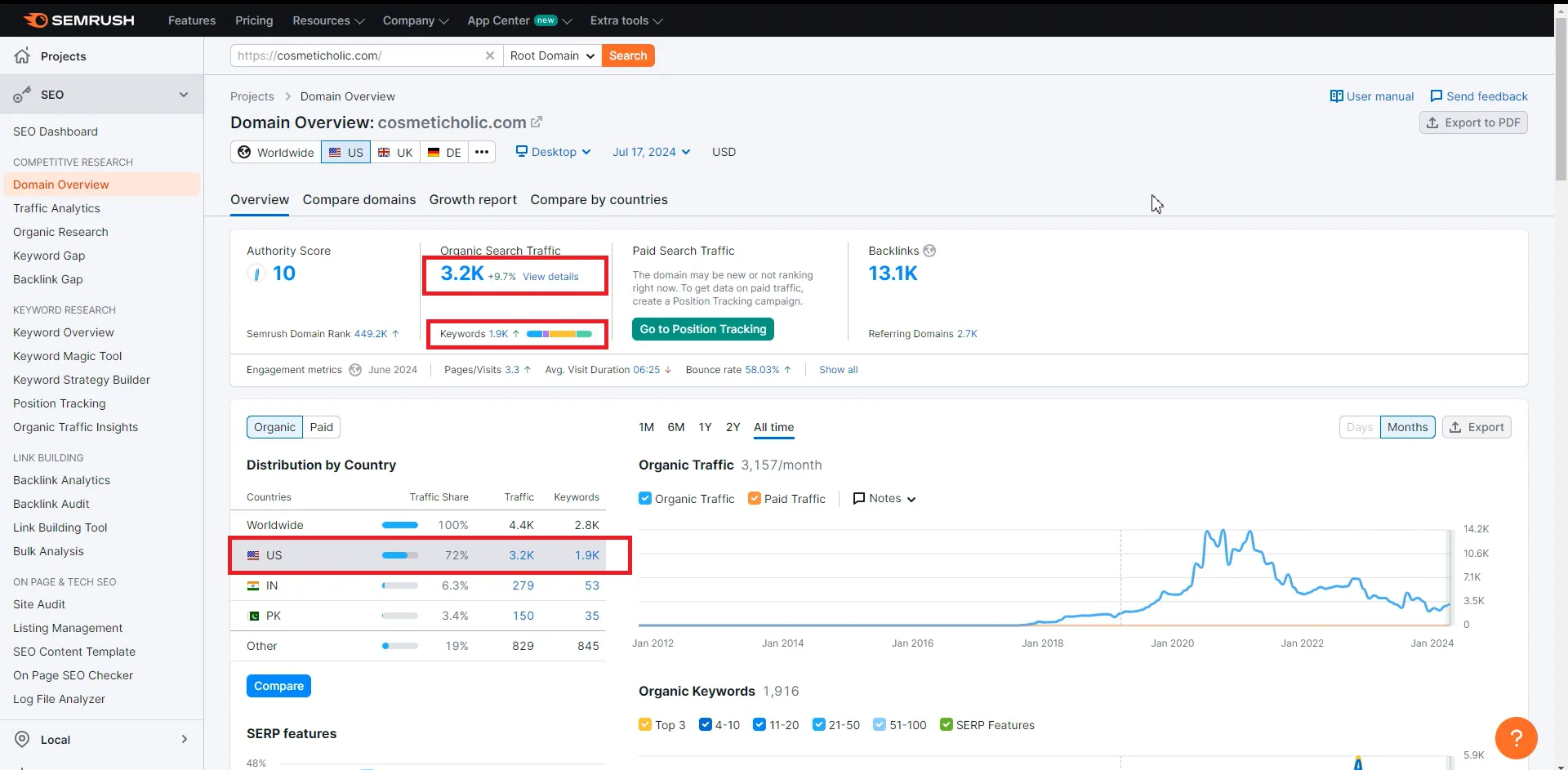
The overview shows that 72% of this domain’s traffic comes from the US, with 3.2k organic search traffic and 1.9k keywords, so its customers are mainly American. Click 1.9k to see the keyword list.
This site ranks in the top 100 for 1916 keywords. Sort by Position from high to low, then focus on keywords that rank well, have low KD (Keywords Difficulty), and match your own positioning. Also weigh Traffic, since the point is picking terms that actually bring visitors.
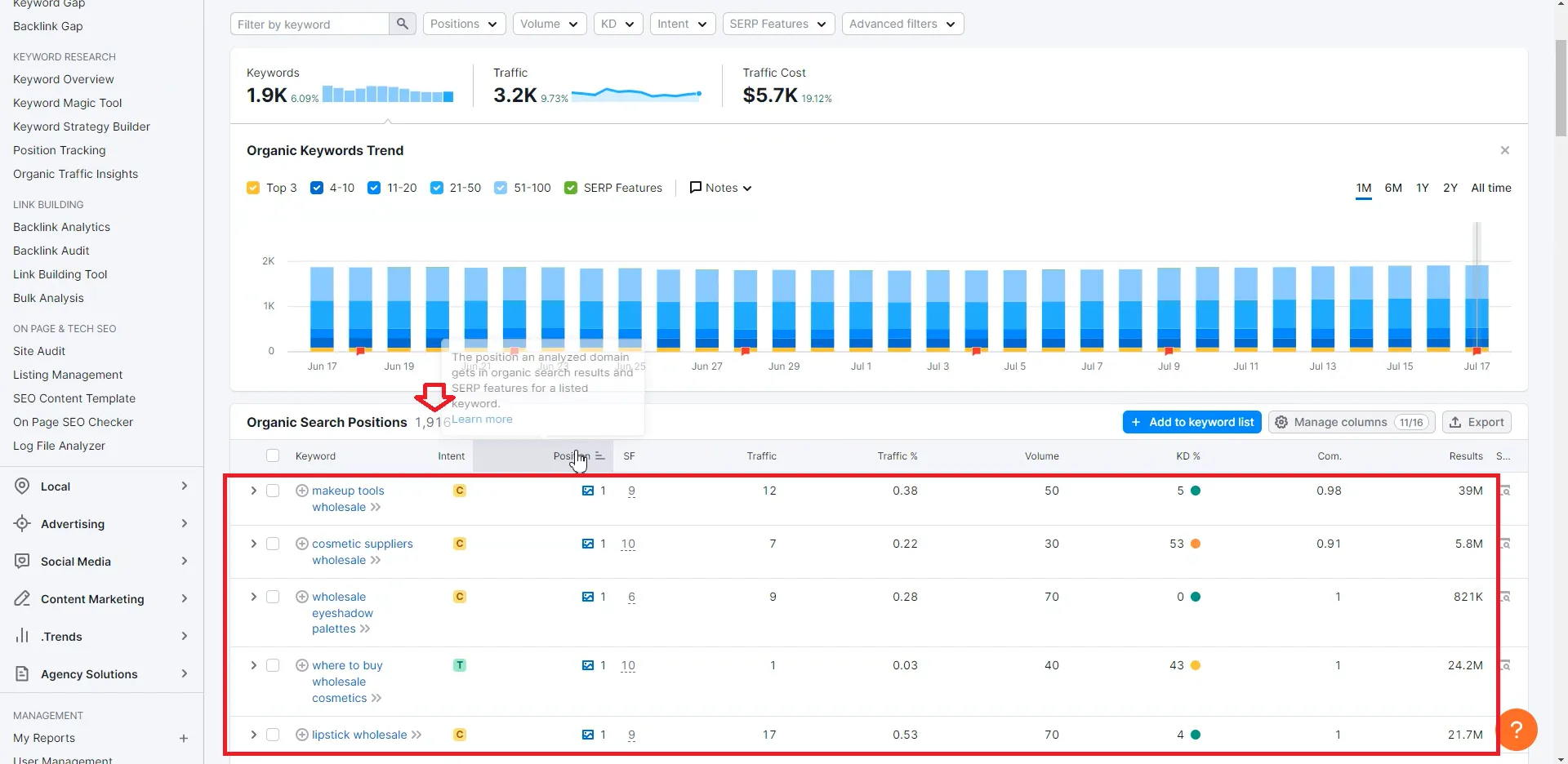
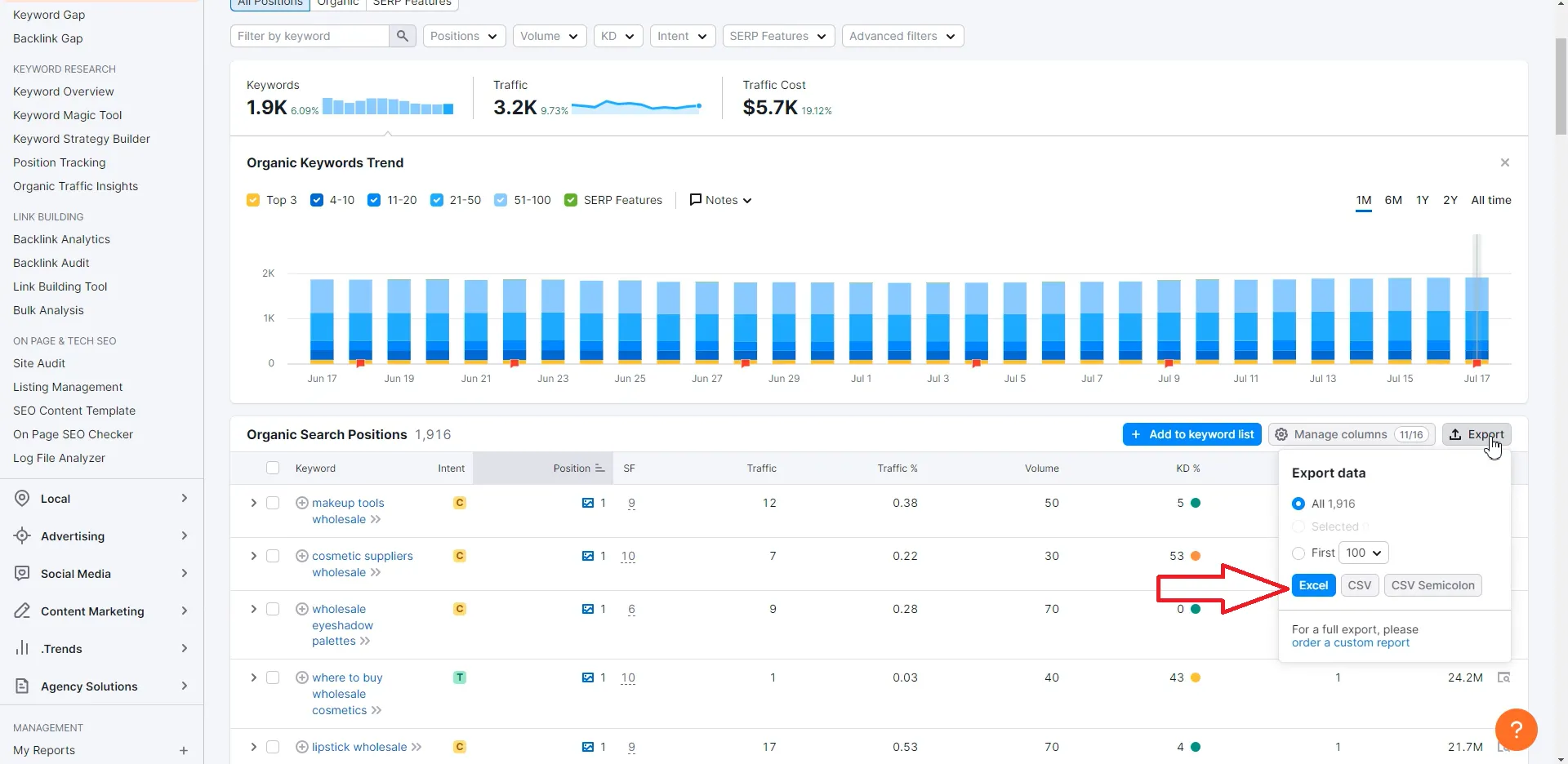
Click export in the top right and save the keyword list as an Excel file.
4. Find more competitors
One website isn’t a rich enough keyword source. You need several, so the pool has enough variety to filter from. Two approaches:
First, go back to the Google results and run the same analysis and export on the sites ranked 2 through 10.
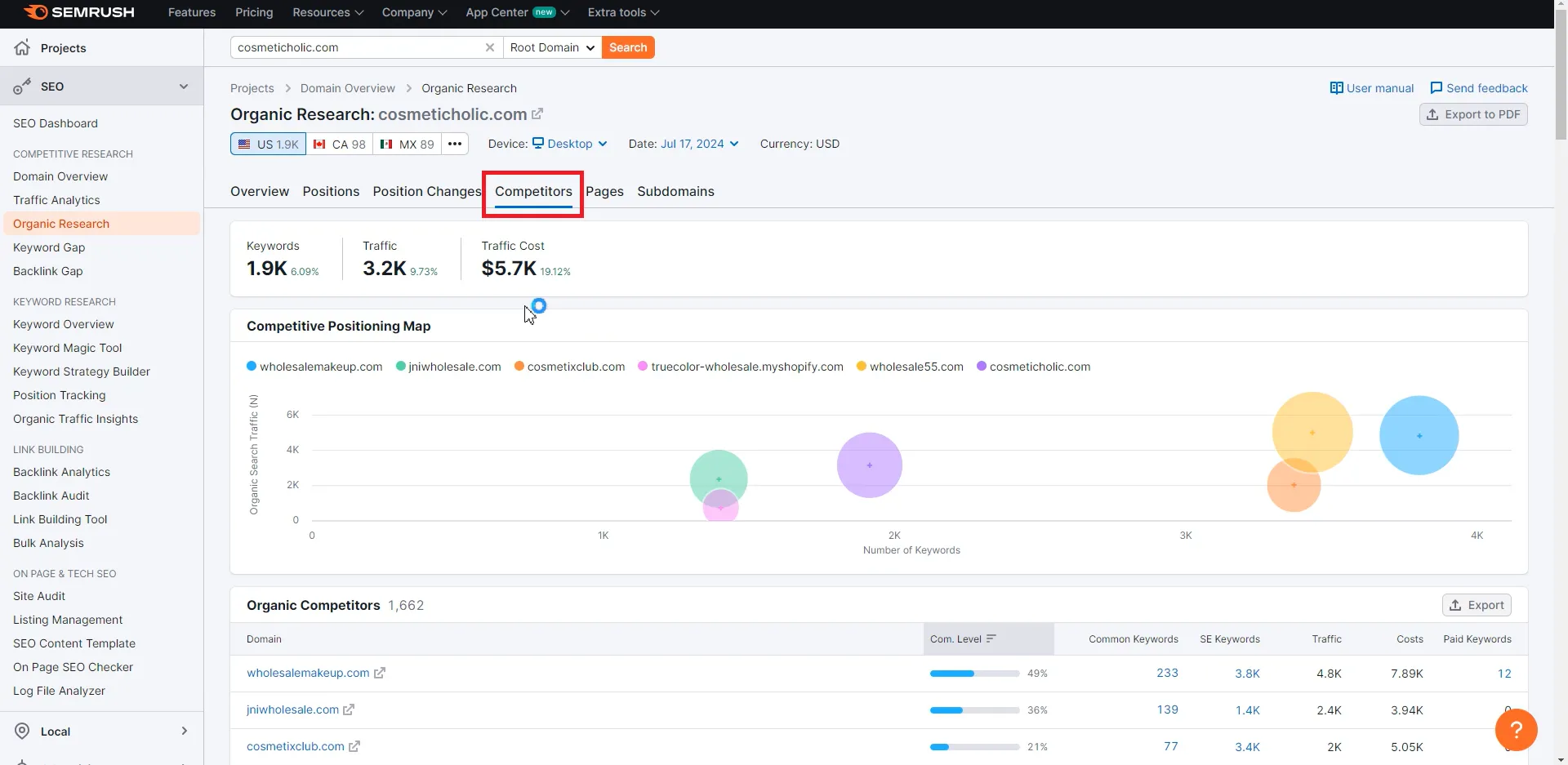
Second, use SEMrush’s competitors function, which recommends sites competing with the one you analyzed, and repeat the keyword export for those.
These steps let you systematically collect competitor keywords, then filter for terms that are relevant to your product and reasonably easy to rank for. On tools: SEMrush is powerful but pricey; if you’re on a budget or just need keyword lookups, a lighter option like KWFinder is worth trying. Google search operators also help with manual research, covered in this guide on 15 Google search operators.
every Thursday.
Hosting reviews, builder comparisons, performance tips, and plugin picks — curated weekly for WordPress site owners and builders.